
Club Kid [Micro-Review]
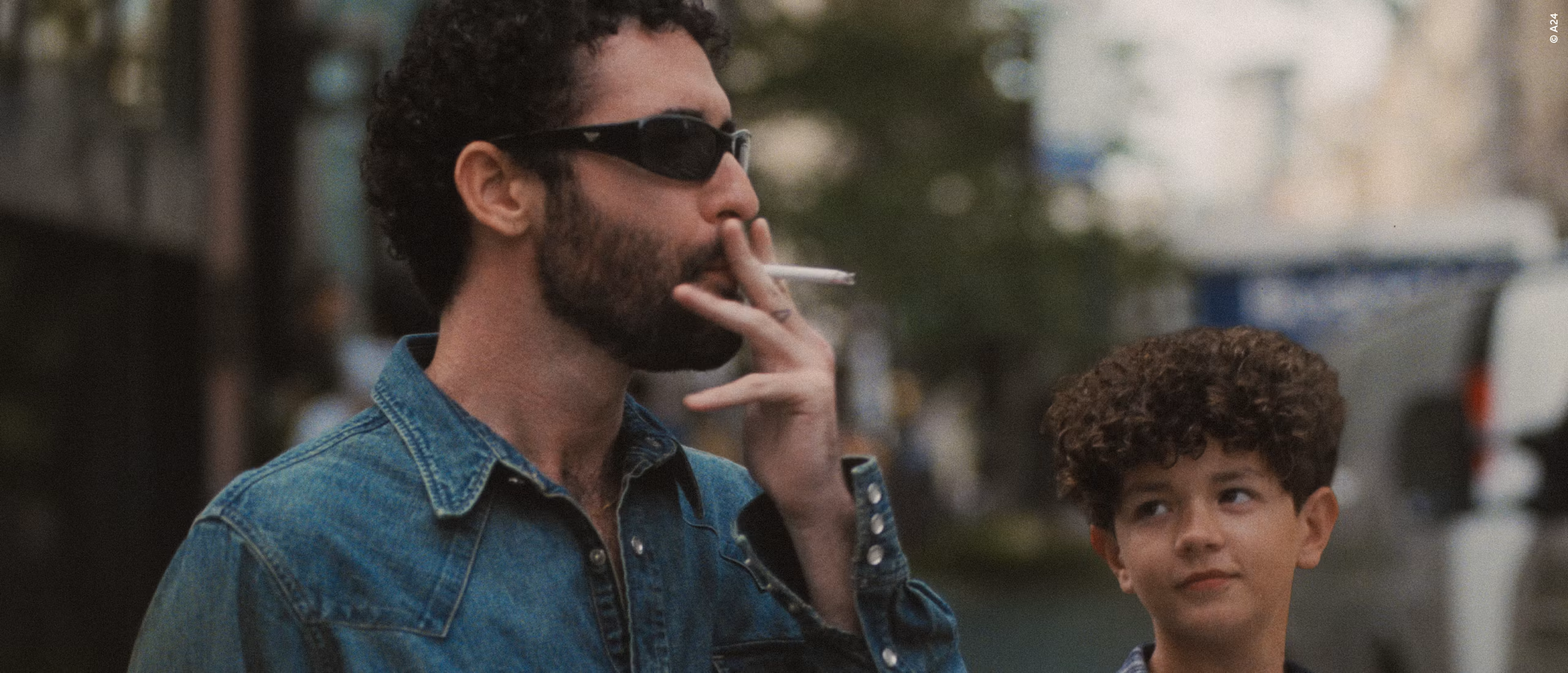
Being familiar with Jason Firstman’s internet persona, one would expect his feature debut to be a radically pop and messy film, primarily tailored to a queer audience. Club Kid (2026) shoots far beyond that premise. It proves to be a surprisingly mature, generous and self-aware cinematic entry which rightfully took Cannes by storm – even sparking the year’s highest distribution bidding war during the festival, which underscores its large commercial and cultural potential. We follow Peter (Jason Firstman himself), a queer party promoter in New York, waking up from a decade of excess, suddenly ridden with the responsibility of Arlo, his 10 years old son he never knew existed. This newly found fatherhood will provide Peter with the anchor his life needed to keep from drowning.
The opening scene already brilliantly distills the film’s essence. Inside a parked cab at night, a solitary driver speaks on the phone in Arabic to his family. All of a sudden, a frenetic group of friends, led by Peter, bursts into the vehicle. The camera pans in dizzying circles as the group hypes themselves up for the club, blasting Rihanna’s Sex With Me (2016) and indulging in all sorts of drugs, all while the driver quietly focuses on the road. Here we have two worlds colliding within the space of the car, ignoring one another beyond the purely transactional nature of their encounter. The rest of the film skillfully draws a bridge between these realities — Firstman jumps from loud backroom parties to quiet nights cooking at home, or the preparation of DJ sets followed by the navigation of childcare systems, ultimately forging a poignant blend of chosen and blood families.
Luckily, Club Kid refuses to fall into a ‘preachy’ morality tale that would condemn the night life in favor of a polite traditional domesticity. Firstman knows to maintain an edge and irreverent tone, while treating all his characters with a profound empathy. Though the directing style does not necessarily bring forward anything groundbreaking, every scene feels lived-in and beautifully textured. Even at their most immensely comedic, the dialogues and the specific usage of language never fall into a caricature of themselves. The film cements Firstman as a fresh new voice in the American cinematic landscape and proves once again the power of telling authentic stories that resemble us.
Photo credits: Club Kid, Zurich Film Fest promo