
Fjord: Norwegian Dilemma
Review of Fjord (Cannes Film Festival)
TITLE: Fjord / DIRECTOR & SCREENWRITER: Cristian Mungiu / CAST: Sebastian Stan, Renate Reinsve, Lisa Loven Kongsli, Thorbjørn Harr, Giulia Nahmany… / DURATION: 146’ / COUNTRY: Romania, France, Norway, Denmark, Finland, Sweden / YEAR: 2026
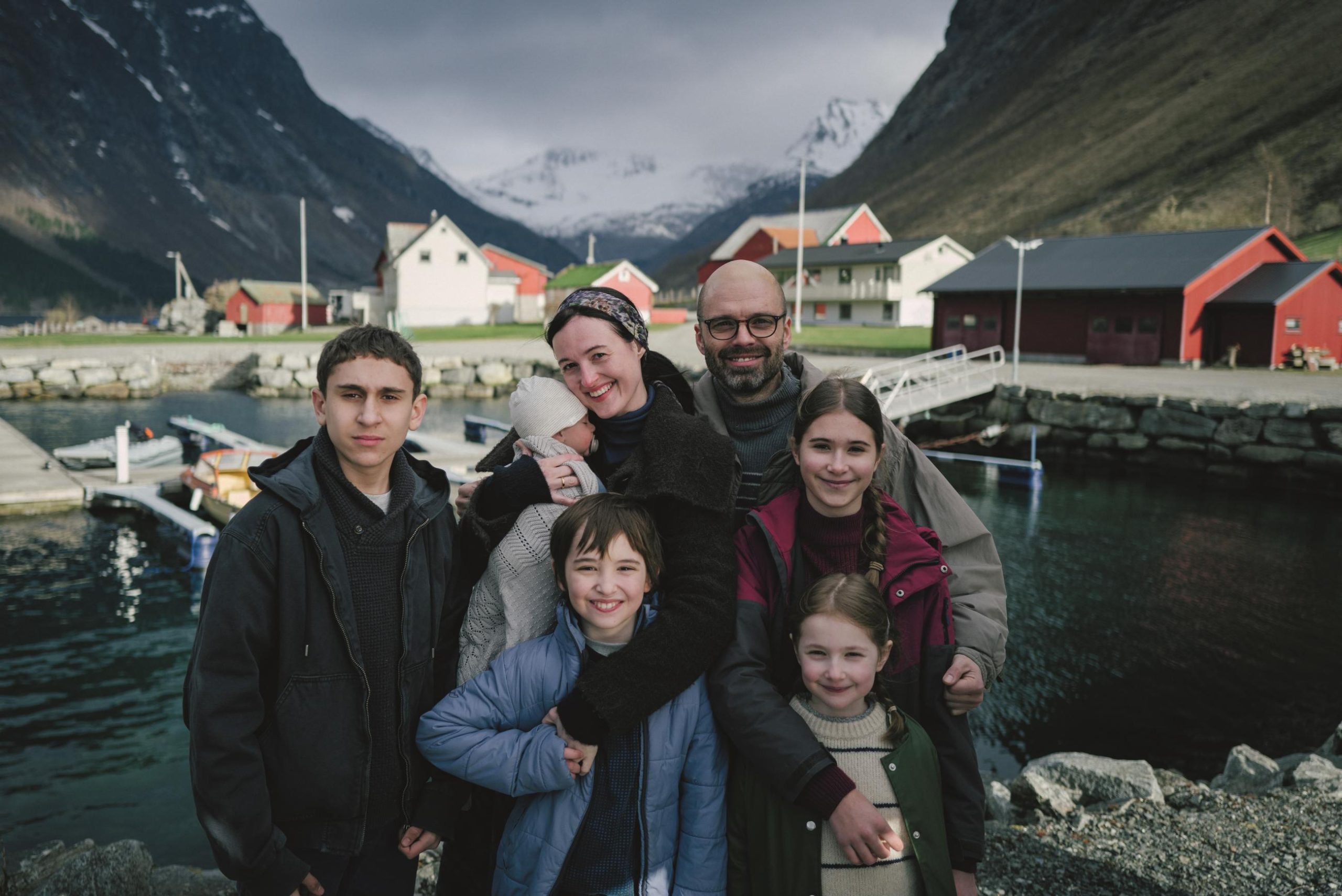
This year’s Palme d’Or opens on a gripping premise inspired by a real-life fait divers. Audiences are thrust into a remote Norwegian village, at the frozen end of a fjord, where the Gheorghius, a pious Christian family with their five children, have relocated from Bucharest with the support of their church. The wife (played by Renate Reinsve) is native to the region, while the husband (a balding Sebastian Stan) is Romanian. Their integration into this tight community is cordial and welcoming, albeit punctuated by obvious dissonances between the family’s traditional values and the progressive Scandinavian society. These cultural disconnects initially appear intriguing, even amusing, to the locals, until bruises are discovered on the eldest daughter’s body and Child Protective Services intervenes to separate the children from their parents. From there, a well-oiled procedural nightmare starts unfolding for the Gheorghius.
With Fjord, Cristian Mungiu delivers yet another thrilling entry in his impeccable track record of hard-hitting social-commentary cinema. The Romanian director continues a legacy of Cannes-premiered films, from the black-market abortion drama 4 Months, 3 Weeks and 2 Days (2007 Palme d’Or), to Beyond the Hills (Best Screenplay, 2012), Graduation (Best Director, 2016), and R.M.N. (2022). Where his previous works dissected religious indoctrination, institutional corruption or everyday xenophobia, Fjord expands the scope to interrogate the increasing polarization of contemporary European society. By bringing his camera outside of Romania, Mungiu brilliantly flips the mirror from the familiar portrayal of the struggle to be progressive in a dogmatic environment. He challenges his audience with a dual-sided critique of two ideological camps, both convinced of their own moral righteousness and gradually losing the capacity for compassion with their neighbors.
The script is remarkably rich, cleverly layering nuances to constantly destabilize the audience’s moral certainty. By juxtaposing the locals’ progressive lifestyle, from the seemingly acceptable spirituality of a Buddhist neighbor to the decision to place a reluctant aging parent into a care home, Mungiu muddies the waters and forces us to re-examine the community’s initial benevolence. The audience is trapped in a skillful moral dilemma, compelled to empathize with characters they probably would usually distance themselves from. While the director masterfully nurtures this ambiguity through what he deliberately chooses to show or omit, he does occasionally appear to take a side, particularly in the satire of the Child Protective Services bureaucracy. This obvious critique is perhaps the film’s main drawback, as its primary strength lies in its otherwise unbiased presentation. Ultimately, Fjord illustrates how a well-meaning pursuit of progressiveness can end up ostracizing part of its own community. By dictating a politically correct set of values, it creates new minorities and resurrects the very systems of oppression it originally sought to dismantle.
The village serves as the perfect location for this drama. Initially presented as a pristine safe-haven of snow-covered roofs and clear waters, the constant threat of avalanches from the surrounding mountains foreshadows what is to come. Through long takes, indulgent pacing and austere atmosphere, the open spaces, filmed in wide screen, turn claustrophobic and gradually confine the characters. In the lead roles, Cannes darlings Renate Reinsve and Sebastian Stan are a brilliant cast. Stan, speaking fluent Romanian, further morphs away from his Marvel roles. Building on the success of his role as a young Donald Trump in The Apprentice (Ali Abbasi, 2024), he portrays the generous but strict patriarch with an unpredictable temper. Reinsve, hot off her success in Sentimental Value (Joachim Trier, 2025), proves her range with a restrained performance of the quiet mother forced to step up for her children.
For all its depiction of our modern society’s flaws, Fjord ultimately leaves a window of optimism. By forging an immediate bond with the rebellious neighbor’s teenager, the two eldest Gheorghiu siblings bypass the ideological dogmas that trap their parents. The new generation quietly builds a bridge across divided territories.
Photo Credits: Fjord, Cannes Film Festival Promo.